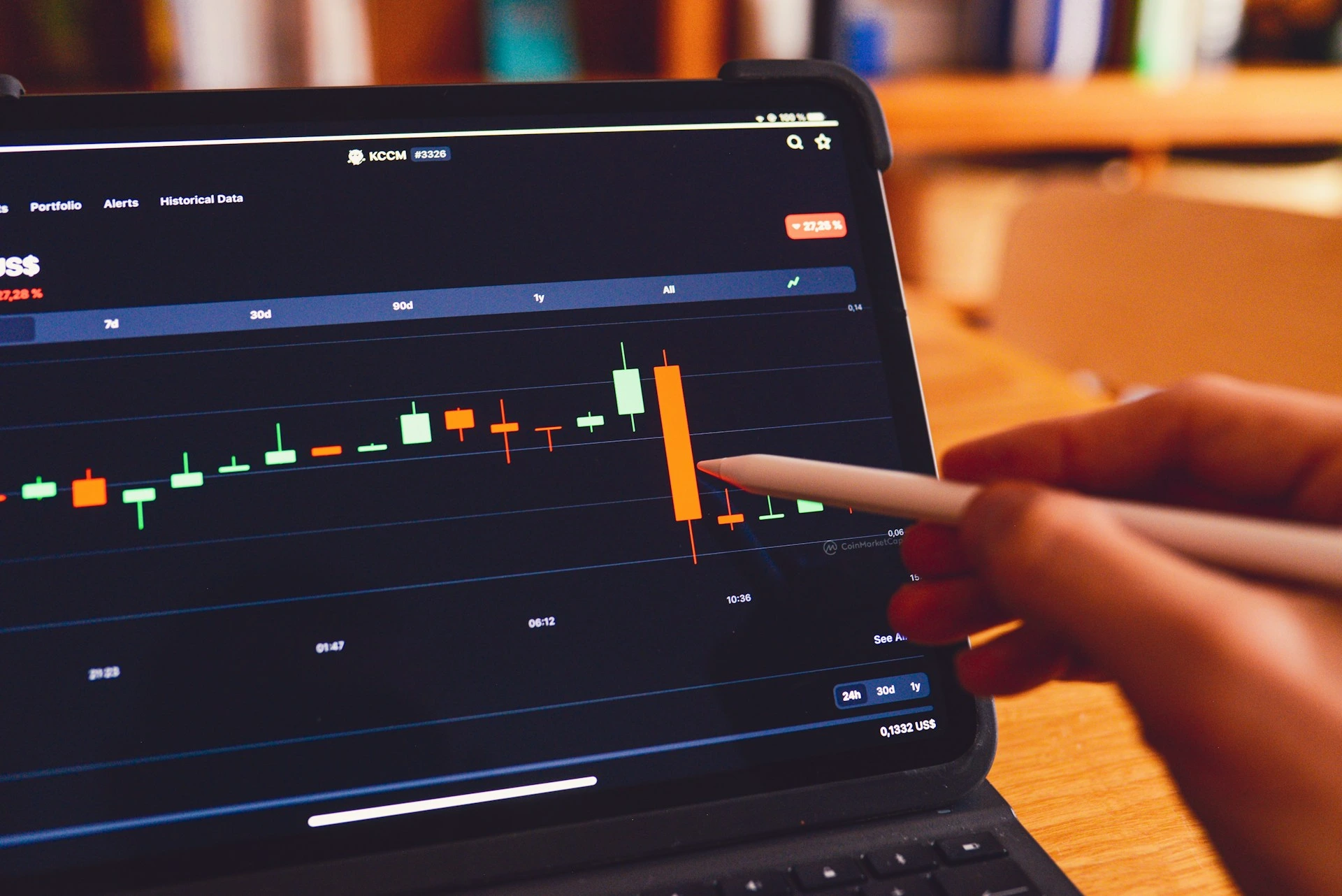
An uptrend refers to a market condition where prices move higher over time. This upward movement reflects sustained buying interest and increasing confidence among market participants. Uptrends are a core concept in market analysis and are commonly used to describe favorable price behavior across different assets.
Understanding what an uptrend is helps investors and traders interpret market direction more clearly. Rather than focusing on short-term fluctuations, an uptrend highlights the broader movement shaping price behavior over time.
Uptrend Definition
An uptrend is defined by a pattern of higher highs and higher lows. This structure indicates that buyers are consistently willing to pay higher prices, pushing the market upward.
Key features of an uptrend include:
-
Successively higher price peaks
-
Successively higher price pullbacks
-
Sustained upward direction over time
An uptrend market does not move upward in a straight line. Pullbacks and pauses occur, but the overall direction remains positive.
How an Uptrend Forms
Strong and consistent buying demand
Uptrends develop when buying demand exceeds selling pressure. As buyers step in more aggressively, prices move higher.
This demand often reflects optimism about economic conditions, earnings growth, or asset-specific fundamentals.
Positive expectations and sentiment
Uptrends are reinforced by positive expectations. As prices rise, confidence increases and attracts additional participants.
This feedback loop supports continued upward movement as long as expectations remain favorable.
Supportive market conditions
Broader market conditions can support uptrends. Accommodative monetary policy, economic expansion, or favorable industry trends often contribute.
These conditions provide a foundation for sustained price appreciation.
Key Characteristics of an Uptrend Market
Higher highs and higher lows
The defining characteristic of an uptrend market is its price structure. Each rally reaches a new high, and each pullback holds above the previous low.
This structure reflects strong underlying demand and controlled selling pressure.
Pullbacks within the trend
Uptrends include pullbacks. These temporary declines allow markets to consolidate before resuming upward movement.
Pullbacks are normal and do not automatically signal weakness or reversal.
Momentum and participation
Uptrends are often accompanied by increasing participation. More buyers enter the market as confidence grows. Momentum builds as prices move higher, reinforcing trend strength.
Uptrend vs Downtrend and Sideways Market
Directional comparison
An uptrend moves upward over time. A downtrend moves downward, while a sideways market lacks clear direction. Recognizing these differences helps investors align expectations with market behavior.
Risk and opportunity profile
Uptrends generally support growth-oriented strategies. Risk is still present, but momentum favors buyers. Downtrends and sideways markets require different approaches and risk management considerations.
Transition between market states
Markets transition between uptrend, downtrend, and sideways phases. These transitions are rarely smooth.
Understanding context helps avoid misinterpreting short-term noise.
Uptrend in Trading and Investing
Trend-following perspective
Uptrends are central to trend-following approaches. Participants seek to align with the dominant direction.
However, timing remains important. Entering late in an uptrend can increase risk.
Long-term investing view
Long-term investors often benefit from uptrend markets. Sustained upward movement supports compounding and growth.
Short-term volatility matters less when the broader trend remains intact.
Risk management within uptrends
Even in uptrend markets, risk management is essential. Sharp pullbacks can occur without warning.
Diversification and position sizing help manage exposure.
Limitations of Uptrend Analysis
False uptrends and short-term noise
Not every upward move forms a true uptrend. Short-term rallies can reverse quickly.
Confirmation over time is necessary to distinguish trends from noise.
End of an uptrend
Uptrends do not last forever. Changes in fundamentals or sentiment can weaken the structure.
Recognizing when higher highs and higher lows fail is important.
Overconfidence risk
Strong uptrends can lead to complacency. Rising prices may encourage excessive risk-taking.
Maintaining discipline helps avoid late-cycle mistakes.
Conclusion
An uptrend is a market condition characterized by higher highs and higher lows over time. Understanding what an uptrend is helps investors and traders recognize favorable market direction and avoid focusing solely on short-term fluctuations.
While uptrend markets support optimism and growth, they still require discipline and risk awareness. Observing how uptrends form, develop, and eventually end improves understanding of market dynamics.
Platforms that allow investors to monitor price trends and market behavior across assets, such as the Gotrade app, can support more informed and disciplined participation in uptrend markets.
FAQ
What is an uptrend?
An uptrend is a price movement defined by higher highs and higher lows.
Does an uptrend mean prices always rise?
No. Uptrends include pullbacks and pauses.
How long can an uptrend last?
Uptrends can last from weeks to years depending on conditions.
Can uptrends occur in all markets?
Yes. Uptrends can occur in stocks, bonds, commodities, and currencies.
References:
- The Trading Analyst, Uptrend Explained, 2026.
- Babypips, Uptrend Definition, 2026.