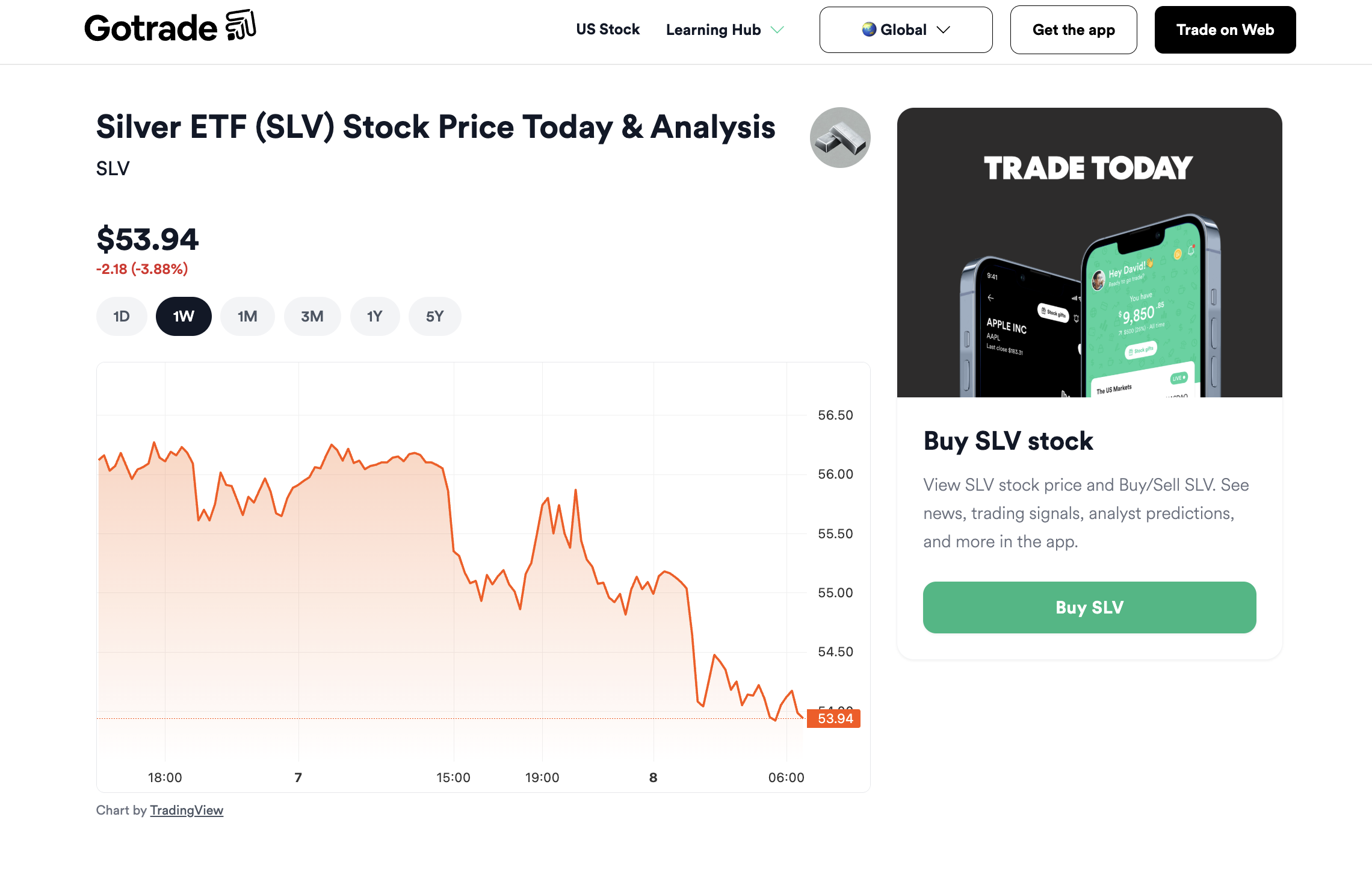
The iShares Silver Trust (SLV ETF) is one of the most widely used instruments for gaining exposure to silver prices through the stock market. For investors who want silver exposure without buying, storing, or insuring physical metal, SLV often becomes the reference point. However, understanding SLV requires more than knowing that it “tracks silver.”
How SLV works, what it actually holds, and how its risks differ from other silver-related investments all matter when deciding whether it belongs in a portfolio.
What SLV Is and What It Represents
SLV is a physically backed Silver ETF designed to reflect the price of silver bullion. The trust holds physical silver bars in secure vaults, and each share represents a fractional interest in those holdings.
SLV does not represent ownership in a mining company, nor does it generate revenue, dividends, or cash flow. Its value is almost entirely driven by movements in silver prices. Because of this structure, SLV should be viewed as a price exposure vehicle, not a business investment. Investors use it to participate in silver price movements rather than to benefit from corporate growth or operational leverage.
If you want to understand how silver prices behave across different economic cycles, reviewing SLV’s long-term price history can help provide useful context. Access and buy SLV ETF on Gotrade!
SLV tracks silver prices by holding physical silver bullion that meets strict quality and purity standards. According to iShares, the silver is stored with professional custodians and is subject to regular audits.
The mechanism that keeps SLV aligned with silver prices is the creation and redemption process. Authorized participants can create new SLV shares by delivering silver to the trust, or redeem shares by withdrawing silver. This arbitrage process helps ensure that SLV’s market price remains close to its net asset value.
Because SLV trades during stock market hours while silver trades globally, short-term pricing differences can occur. These are usually temporary and tend to normalize over time.
SLV’s Prospects as a Silver Exposure Tool
SLV’s prospects depend largely on silver’s unique role in the global economy. Unlike gold, silver functions both as a precious metal and an industrial commodity.
Industrial demand from electronics, solar energy, and manufacturing plays a significant role in silver price dynamics. During periods of economic expansion or technological growth, silver prices may benefit from rising industrial usage. At the same time, silver also attracts investment demand during inflationary periods or currency uncertainty. This dual demand profile gives SLV exposure to multiple macro themes, but it also increases volatility.
SLV does not inherently benefit from economic growth in the same way equities do. Its performance depends on silver prices rather than corporate earnings or innovation.
Risks of Investing in SLV
Silver price volatility
Silver prices are historically more volatile than gold prices. SLV fully reflects this volatility, which can lead to sharp price swings over short periods.
This volatility can challenge investors who expect silver to behave like a stable defensive asset.
Expense ratio and tracking drag
SLV charges an annual expense ratio to cover storage, insurance, and operational costs. Over long holding periods, this creates a gradual performance drag relative to spot silver prices. While modest, the impact compounds over time.
No income generation
SLV does not produce dividends or interest. Returns depend entirely on price appreciation.
Opportunity cost becomes an important consideration during periods when other assets generate income or growth.
Market behavior risk
Silver is sometimes assumed to act as a safe haven. In reality, silver prices can decline during economic slowdowns due to reduced industrial demand. SLV inherits this cyclical risk.
How SLV Fits Into Portfolio Strategy
SLV is often used as a tactical or diversification tool rather than a core holding. Its higher volatility makes position sizing especially important.
For many investors, SLV works best when:
Used to complement, not replace, other assets
Sized smaller than gold exposure due to higher volatility
Evaluated in relation to economic cycles and industrial trends
SLV can add diversification, but it requires realistic expectations and disciplined risk management.
Conclusion
SLV is a physically backed Silver ETF that provides direct exposure to silver prices without the complexities of physical ownership. Its performance is driven by silver’s dual role as a precious and industrial metal, which creates both opportunity and volatility.
Understanding how SLV works, its prospects, and its risks helps investors use it intentionally rather than reactively. SLV is most effective when its role is clearly defined within a diversified portfolio and aligned with an investor’s risk tolerance.
If you want to explore SLV alongside other Silver ETFs and understand how each behaves across different market environments, the Gotrade app allows you to compare silver exposures and build positions gradually based on your strategy.
Gotrade is the trading name of Gotrade Securities Inc., which is registered with and supervised by the Labuan Financial Services Authority (LFSA). This content is for educational purposes only and does not constitute financial advice. Always do your own research (DYOR) before investing.