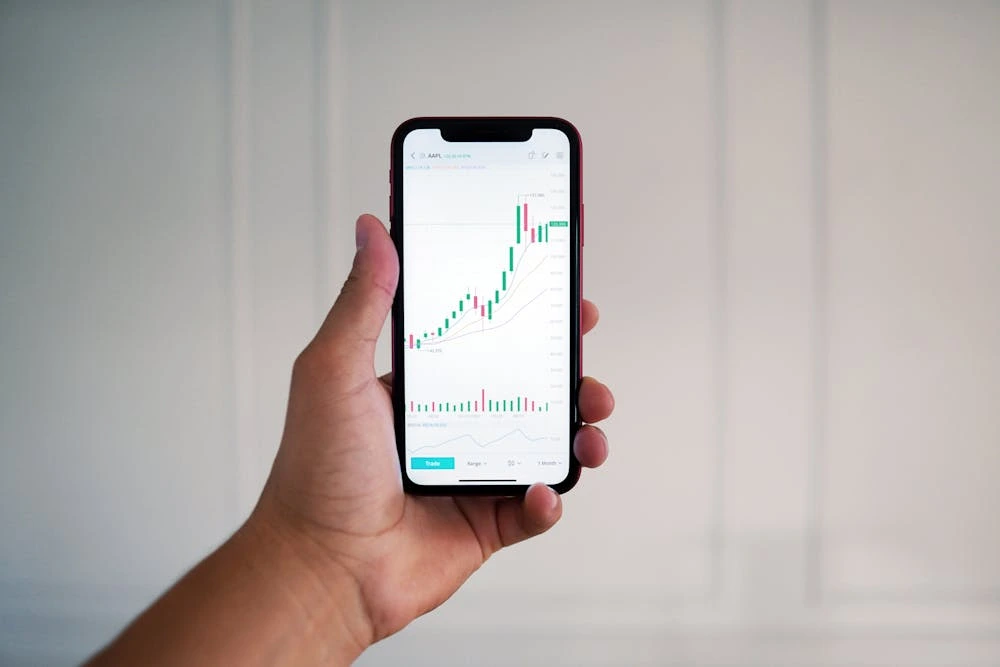
A long-legged doji is a candlestick pattern that reflects extreme uncertainty in the market. It forms when price moves significantly both higher and lower during a session, yet closes very close to its opening price. The result is a candle with a very small body and long upper and lower shadows.
Understanding the long-legged doji helps traders and investors recognize moments when the market is actively conflicted. Unlike standard doji candles that show mild indecision, this pattern highlights intense disagreement between buyers and sellers, often during volatile or transitional phases.
How a Long-Legged Doji Forms
The long-legged doji forms when neither buyers nor sellers are able to maintain control despite aggressive price movement.
Typical characteristics include:
-
A very small or nearly flat candle body
-
Long upper and lower wicks of similar length
-
Large intraperiod price swings
During the session, buyers push prices higher, sellers respond by pushing prices lower, and both sides fail to hold control by the close. This tug-of-war is what defines the pattern.
What the Long-Legged Doji Reveals
Volatility without direction
The long-legged doji shows that volatility exists, but direction does not. Price travels widely, yet ends up unchanged.
This combination often appears when markets are reassessing value.
Conflict between conviction and doubt
Participants act aggressively during the session, but confidence does not carry through to the close.
This behavior reflects internal conflict rather than clarity.
Decision pressure building
Long-legged doji candles often appear before markets make important decisions. The indecision suggests tension that may resolve soon.
The candle itself does not decide the outcome.
Where Long-Legged Doji Patterns Commonly Appear
Near market turning points
Long-legged doji patterns often appear near potential turning points, where trends slow and participants reassess risk.
This makes them more informative at extremes than in calm conditions.
During high-impact events
Earnings releases, economic data, or policy announcements often coincide with long-legged doji candles.
Information shocks increase disagreement.
In overextended trends
When trends become stretched, long-legged doji candles may reflect growing uncertainty about sustainability.
Momentum begins to waver.
Long-Legged Doji Compared With Other Doji Types
Long-legged doji vs standard doji
A standard doji reflects mild balance. A long-legged doji reflects intense conflict.
The difference lies in volatility, not structure.
Long-legged doji vs spinning top
Spinning tops have small bodies and shorter wicks. Long-legged doji candles show much larger price swings. This makes the long-legged doji more emotionally charged.
Importance of wick symmetry
While symmetry is common, it is not required. The key feature is extended movement on both sides, not perfect balance. Interpretation should remain flexible.
Confirmation and Interpretation Guidelines
Why confirmation is essential
A long-legged doji does not indicate direction. Confirmation comes from what happens next. Subsequent price action provides clarity.
Watching the next session
A strong move following a long-legged doji often reflects resolution of prior conflict.
The direction of the breakout matters more than the doji itself.
Volume as a supporting clue
High volume during a long-legged doji suggests widespread participation in the conflict. Low volume suggests uncertainty among fewer participants.
Common Misreadings of Long-Legged Doji Patterns
Assuming immediate reversals
A frequent mistake is assuming a long-legged doji signals reversal. It signals indecision, not direction. Markets may continue the trend after brief hesitation.
Ignoring broader trend context
The same pattern can mean different things in different trends. Context determines relevance.
Overreacting to intraday movement
Large wicks can look dramatic. Overreacting without confirmation often leads to false decisions.
Patience improves outcomes.
Long-Legged Doji and Risk Awareness
Elevated uncertainty environments
The long-legged doji often appears during heightened uncertainty. Price may become erratic before direction emerges. Risk management becomes critical.
Position sizing considerations
Because direction is unclear, exposure should reflect higher uncertainty. Smaller positions reduce stress.
Long-term investor perspective
Long-term investors typically treat long-legged doji candles as short-term noise unless aligned with broader structural changes. Short-term conflict rarely overrides fundamentals.
Conclusion
The long-legged doji reflects intense intraday conflict and uncertainty, where neither buyers nor sellers are able to gain control despite large price swings. Understanding the long-legged doji helps traders and investors recognize moments of heightened tension rather than assuming immediate directional outcomes.
The pattern’s value lies in awareness, not prediction. It signals that the market is struggling to agree on direction and that resolution may follow.
If you want to observe how long-legged doji patterns behave across different assets, events, and timeframes, tracking volatility behavior and follow-through across markets in the Gotrade app can help deepen your understanding of market psychology and execution risk.
FAQ
What is a long-legged doji?
It is a doji candle with long upper and lower shadows showing high volatility and indecision.
Does a long-legged doji signal a reversal?
No. It signals uncertainty, not direction.
Is a long-legged doji stronger than a regular doji?
It reflects stronger conflict due to larger price swings.
Is volume important for interpreting this pattern?
Yes. Volume helps gauge how widespread the conflict is.
References
- Groww, Long-Legged Doji Candlestick, 2026.
- XS, Long Legged Doji, 2026.