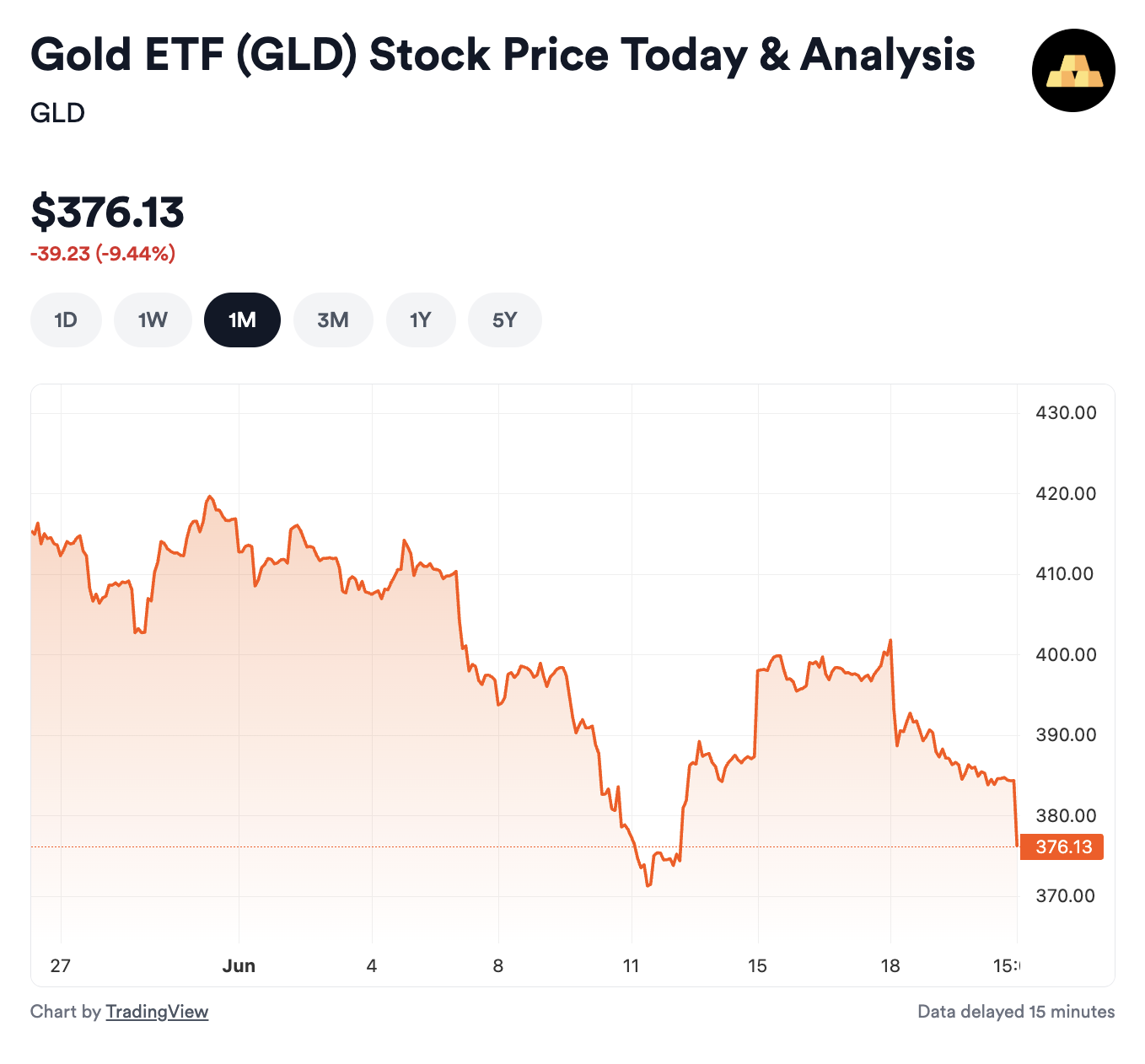
The SPDR Gold Shares (GLD ETF) is one of the most widely used Gold ETFs in the world. For many investors, GLD serves as the default way to gain exposure to gold prices without buying and storing physical bullion. Its size, liquidity, and long operating history make it a central reference point in gold-related investing.
Understanding GLD requires more than knowing that it “tracks gold.” How GLD works, what drives its performance, and what risks it carries all matter when deciding whether it fits your portfolio. This article breaks down GLD’s structure, how it tracks gold prices, its prospects, and its limitations.
What GLD Is and What It Represents
GLD is a physically backed Gold ETF designed to reflect the price of gold bullion. Each share represents fractional ownership of gold held in custody by the trust.
Unlike gold mining stocks, GLD does not represent ownership in companies. It does not generate income, dividends, or earnings growth. Its value rises and falls almost entirely based on movements in gold prices.
Because of this structure, GLD is best understood as a price exposure instrument, not a business investment. Its role is to mirror gold’s behavior rather than outperform it.
If you want to understand how gold prices behave across different market cycles, observing GLD’s long-term price history can provide a practical reference point. Check it on Gotrade App, now!
GLD tracks gold prices through direct ownership of physical gold bullion stored in secure vaults. The trust holds gold bars that meet specific quality standards, and these holdings are audited regularly.
The key mechanism that keeps GLD aligned with gold prices is the creation and redemption process. Authorized participants can create new GLD shares by delivering gold to the trust or redeem shares by withdrawing gold. This process allows arbitrage to keep GLD’s market price close to its net asset value.
GLD trades during stock market hours, while gold trades globally around the clock. Short-term differences can occur due to timing, but these are usually temporary. Over longer periods, GLD closely reflects spot gold prices minus expenses.
Prospects as a Gold Exposure Tool
GLD’s prospects depend almost entirely on the outlook for gold itself rather than company-level growth or innovation.
Gold tends to attract demand during periods of economic uncertainty, rising inflation expectations, declining real interest rates, or geopolitical stress. In these environments, GLD often benefits as investors seek diversification or protection against currency risk.
However, GLD does not benefit from economic expansion in the same way equities do. During periods of strong growth, rising interest rates, or improving risk appetite, gold prices may stagnate or decline. In those conditions, GLD’s performance may lag other asset classes.
GLD’s value lies in function, not return maximization. It is most effective when used intentionally as part of a broader allocation rather than as a standalone investment.
Risks of Investing in GLD
Gold price volatility
GLD is fully exposed to gold price movements. Gold prices can experience sharp swings due to changes in interest rates, currency strength, and macro sentiment. GLD offers no income to offset price declines.
Expense ratio and long-term drag
GLD charges an annual expense ratio to cover storage, insurance, and administration. Over long holding periods, these fees create a gradual performance drag relative to spot gold. While modest, this cost compounds over time. GLD’s annual expense ratio is 0.40%, and that cost shows up over time in slightly lower returns.
No yield or cash flow
Unlike stocks or bonds, GLD does not generate dividends or interest. Returns depend entirely on price appreciation. This makes opportunity cost an important consideration.
Market perception risk
Gold is often assumed to always act as a hedge. In reality, gold prices do not rise in every crisis. During liquidity-driven selloffs, gold and GLD can decline alongside risk assets.
Relying on GLD as guaranteed protection can lead to misplaced expectations.
How GLD Fits Into Portfolio Strategy
GLD is commonly used as a diversification and risk management tool. Its low correlation with equities in many environments can help smooth portfolio volatility.
For most investors, GLD works best when:
Sized modestly rather than aggressively
Held alongside growth and income assets
Evaluated periodically rather than held indefinitely without review
GLD is not designed to outperform equities or generate income. Its strength lies in providing exposure to gold’s defensive characteristics when conditions support that role.
Conclusion
GLD is a straightforward, highly liquid Gold ETF designed to track gold prices through direct ownership of physical bullion. It offers accessible gold exposure without storage concerns, but it also carries risks tied to gold price volatility, expenses, and opportunity cost.
Understanding how GLD tracks gold, what drives its prospects, and where its risks lie helps investors use it more effectively. GLD works best when its role is clearly defined within a diversified portfolio, rather than treated as a default or permanent solution.
If you want to explore GLD alongside other Gold ETFs and understand how each behaves across different market conditions, the Gotrade app allows you to compare gold exposures and build positions gradually based on your strategy.
Gotrade is the trading name of Gotrade Securities Inc., which is registered with and supervised by the Labuan Financial Services Authority (LFSA). This content is for educational purposes only and does not constitute financial advice. Always do your own research (DYOR) before investing.